How Professional Interpreters Improve Courtroom Communication
- August 11, 2026· Article by Maria Jones
- Languages , french to english translation services
When courtroom proceedings involve parties who don't share a common language, the quality of interpretation can directly influence the outcome of a case. Professional interpreters do far more than convert words from one language to another; they preserve legal meaning, tone, and nuance under intense pressure.
Why courtroom interpretation demands specialized skill
Legal proceedings move quickly, and interpreters must render testimony in real time without losing precision. A single mistranslated word in a witness statement or cross-examination can alter how a judge or jury perceives credibility, making specialized training in legal terminology essential rather than optional.
Court interpreters must also remain strictly neutral, resisting any urge to clarify, summarize, or soften statements, since their role is to convey exactly what is said, not to interpret intent.
Beyond the courtroom: business interpretation needs
International business negotiations, depositions, and arbitration hearings carry similarly high stakes. Companies expanding into new markets often need french to english translation services for contracts and interpreted meetings alike, ensuring nothing is lost between negotiating parties.
Coordinating interpretation across multiple cases
Agencies managing interpreters across many simultaneous legal and business engagements benefit from TMS software to track terminology, scheduling, and case-specific glossaries, ensuring consistency when the same client or case requires ongoing multilingual support.
Professional standards and accreditation
Bodies such as the Institute of Translation and Interpreting and the National Association of Judiciary Interpreters and Translators set rigorous standards for certification, ethics, and ongoing training that courts and legal teams rely on when selecting qualified interpreters.
The difference between simultaneous and consecutive interpretation
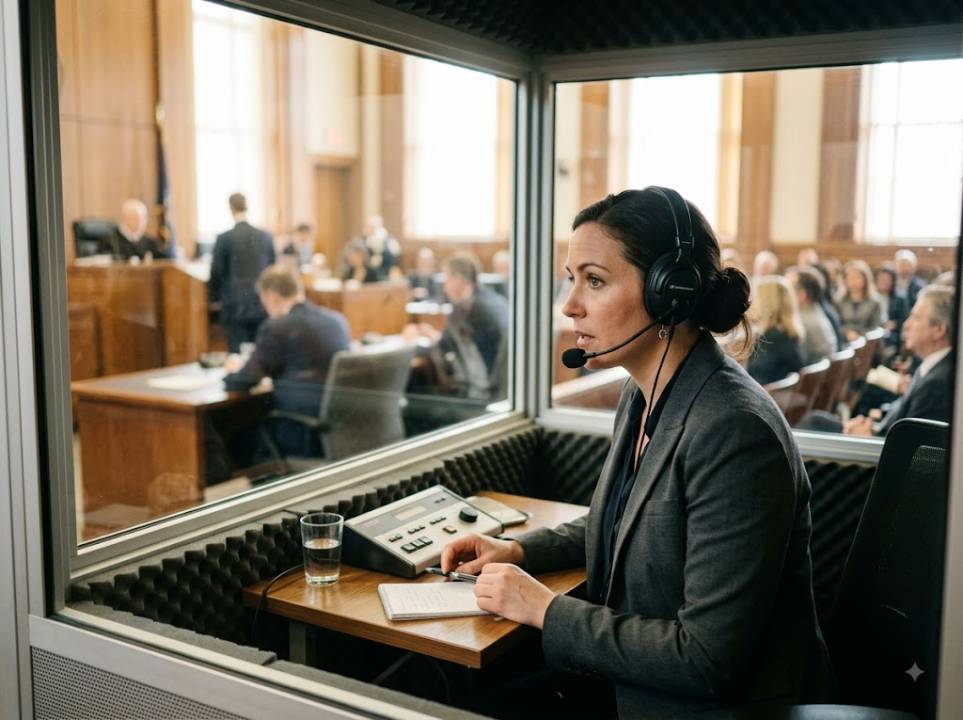
Courtroom settings often call for consecutive interpretation, where the interpreter waits for a speaker to pause before rendering their statement, allowing for precision and the opportunity to ask for clarification when needed. Conference and arbitration settings, by contrast, frequently rely on simultaneous interpretation, delivered in real time through headsets while the speaker continues talking.
Each mode demands distinct skills and stamina, and experienced interpreters train extensively to switch between them depending on the format and formality of a given proceeding.
Preparing interpreters for specialized cases
Complex litigation, such as patent disputes or financial fraud cases, requires interpreters to master highly technical vocabulary well beyond general legal terms. Reputable interpretation providers assign specialists with relevant subject-matter background rather than treating all cases as interchangeable, recognizing that technical accuracy is just as important as linguistic fluency.
Pre-hearing preparation, including reviewing case documents and terminology glossaries, allows interpreters to anticipate difficult passages and maintain accuracy even under the pressure of live proceedings.
Remote interpretation and its growing role
Video remote interpretation has expanded access to qualified interpreters for courts and businesses in areas where in-person specialists are scarce. While convenient, remote setups require reliable technology and careful coordination to avoid the miscommunication that can arise from audio delays or connectivity issues during critical testimony.
Selecting a qualified interpretation partner
Courts, law firms, and businesses should verify an interpreter's certification, subject-area experience, and references before engaging them for high-stakes proceedings. Many jurisdictions maintain official rosters of court-certified interpreters, which serve as a useful starting point, though additional vetting for specialized cases is often warranted.
Building a relationship with a trusted interpretation agency ahead of need, rather than searching under time pressure, gives legal teams more confidence and continuity across multiple hearings involving the same parties or language pair.
The cost of inadequate interpretation
Cutting corners on interpretation quality can lead to mistrials, appeals, or breakdowns in business negotiations that far exceed the cost of hiring a qualified professional in the first place. Courts increasingly recognize that interpretation is not a peripheral service but a core component of due process for non-native speakers.
Training the next generation of legal interpreters
As demand for qualified interpreters grows alongside increasingly diverse populations, training programs and university certificate courses have expanded to meet the need. These programs combine language proficiency testing with instruction in legal ethics, courtroom procedure, and specialized terminology across criminal, civil, and family law contexts.
Mentorship from experienced interpreters also plays a significant role in preparing newcomers for the intensity of live legal settings, where composure under pressure matters as much as linguistic skill.
Looking ahead for multilingual legal services
As populations become more linguistically diverse, courts and businesses alike will continue to depend on skilled interpreters to guarantee fair access to justice and clear communication in high-stakes settings. Investing in qualified, well-prepared interpretation services remains one of the most effective ways to protect the integrity of legal proceedings for every party involved.
Ultimately, the value of a skilled interpreter is measured not just in words rendered but in outcomes protected: a fair trial, a successful negotiation, or a clear understanding between parties who might otherwise struggle to communicate at all.